suitability to fire codes
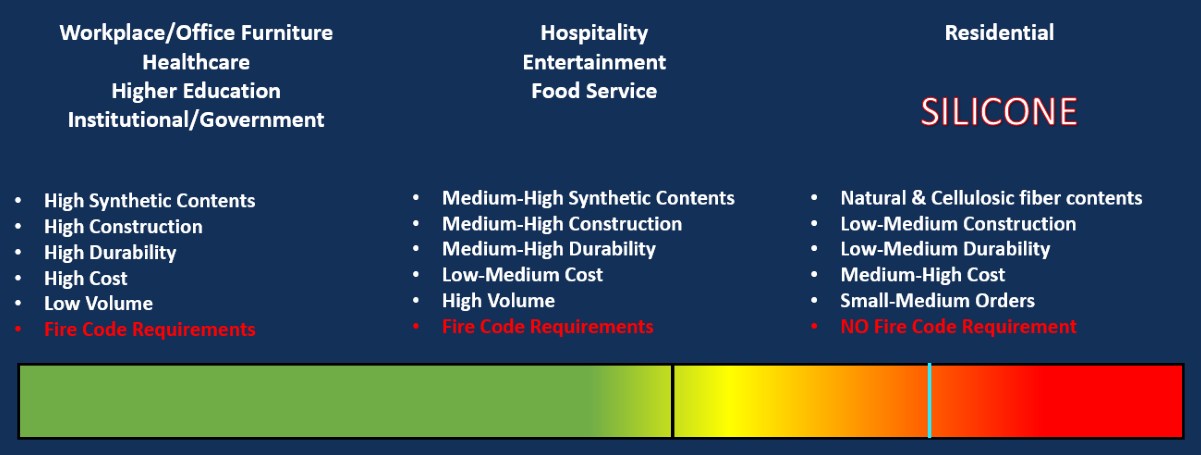
Alta is designed to meet the fire codes when the fabric is suitable for commercial applications. Some residential constructions may pass some fire codes, depending upon fiber content and composition. However, it is common that a residential construction may not be suitable to pass a commercial fire code.
For example, a 100% cotton fabric may not be suitable for drapery in a commercial environment as it is susceptible to dimensional instability and typically will not pass the NFPA 701 fire code.
silicone
Silicone is present on some fabrics, especially residential textiles, as it is used as a softening agent during the manufacturing process. Most textiles treated with silicone will have poor performance and failure to fire codes due to the natural properties of silicone, such as it attracts oil and dirt and is flammable. The presence of silicone on a residential fabric will often contribute to, or cause, the inability to pass commercial fire codes.

what is suitable?
The best guideline is to select textiles designed for the environment you’re specifying, for example; outdoor textiles for outdoor applications, upholstery grade textiles for commercial upholstery and residential textiles for residential projects where fire codes are not required.
We do understand that sometimes it may be difficult to determine if a fabric is suitable to pass a fire code which is why we offer development and testing. When a pattern is high in natural fiber contents it can sometimes still fail FR testing even with treatment. Our Product Development team combines years of experience and knowledge with textile trials to assist in determining a fabric’s suitability. In combination with Applied Lab‘s certified testing, we offer the tools you need to ensure fire codes are not a problem.